
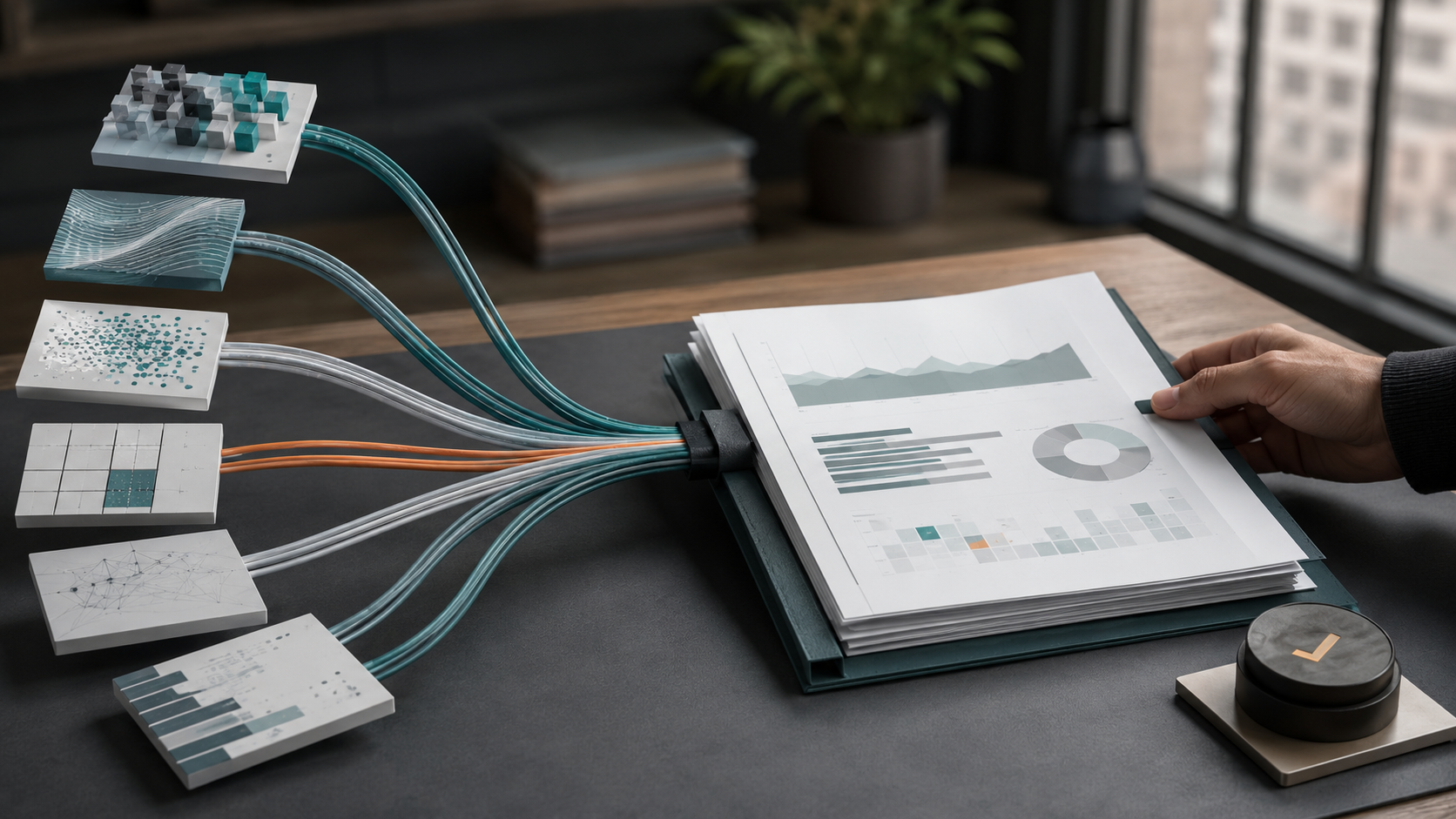
Recurring reports become difficult to trust when each source arrives with a different definition, schedule, format, or level of completeness. The report may still look polished, but the people reviewing it have to remember which numbers came from which system and whether they can be compared.
ReportWerks helps make multi-source reporting more visible by giving teams a repeatable path from incoming data to reviewed reporting. The value is not only putting charts on a page. It is making the reporting workflow easier to understand, check, and deliver.
The problem starts before the report is built
A recurring report may combine website activity, CRM records, advertising results, fundraising transactions, ecommerce orders, or operational spreadsheets. Each source can be reasonable on its own while still creating confusion together.
One system may count an inquiry when a form is submitted. Another may count a lead only after a record is qualified. A third may use the invoice date rather than the order date. If those definitions are not written down, a report can imply a comparison that the underlying data does not support.
A useful reporting workflow begins with a source inventory:
- What system provides each metric?
- What does the metric mean in that system?
- What time zone and date field does it use?
- How fresh is the data?
- What exclusions, filters, or transformations apply?
Bring the sources together without hiding their differences
Multi-source reporting does not require pretending that every system measures the same thing. It requires preserving the source context while presenting the result clearly.
For example, a monthly report might show website form submissions beside CRM-qualified opportunities. Those measures can be useful together, but the report should make the handoff visible. A reviewer should be able to see that one number describes activity at the website and the other describes a later business outcome.
ReportWerks can support this kind of repeatable reporting structure by giving teams a consistent place to organize recurring inputs, present the right context, and review the result before delivery.
Review steps make recurring delivery accountable
A report that runs automatically still needs a review process. The review does not mean manually checking every row each month. It means defining the exceptions that deserve attention:
- A source did not arrive on schedule.
- A record count changed sharply from the expected pattern.
- A required field is missing.
- A date range is incomplete.
- A metric definition changed.
- A source was refreshed after the reporting cutoff.
The reviewer should know what to do with each exception. Some require a source-system check. Some require a note in the report. Others should stop delivery until the data is corrected.
Make the report useful to the person making the decision
Good reporting reduces the distance between a number and the question it is meant to answer. A department leader may need a concise view of progress, exceptions, and next actions. An analyst may need more detail about source timing, filters, and definitions. A recurring report can serve both audiences when the summary stays focused and the supporting context remains available.
That is where a repeatable reporting workflow earns its keep. The layout, source notes, review prompts, and delivery process can remain consistent while the details reflect the organization, program, or reporting period.
Where ReportWerks fits
ReportWerks is a practical fit when an organization needs recurring reporting across more than one system and wants the workflow to be easier to review than a collection of manually assembled files. It can sit within a broader DigitalWerks engagement that includes analytics planning, data integration, dashboard strategy, automation, or data-quality work.
The first step is not choosing a chart style. It is identifying the decisions the report should support, the sources that inform those decisions, and the checks required before the report is delivered.
Explore ReportWerks or contact DigitalWerks to discuss a recurring reporting workflow that keeps source context, review, and delivery connected.